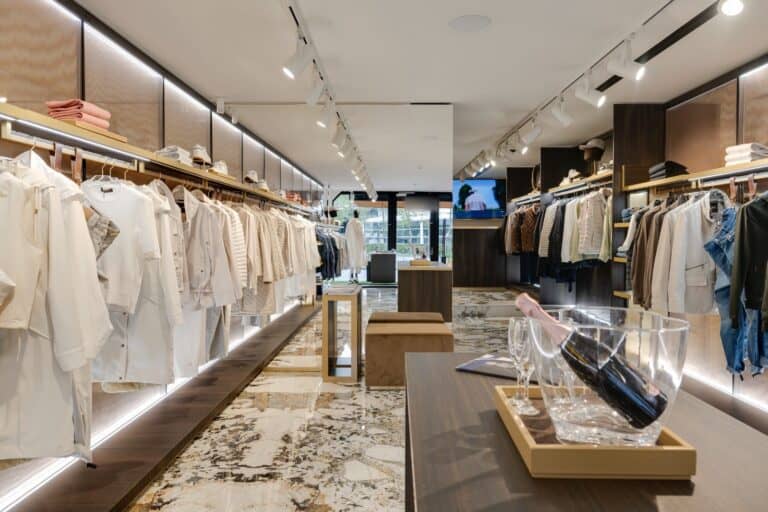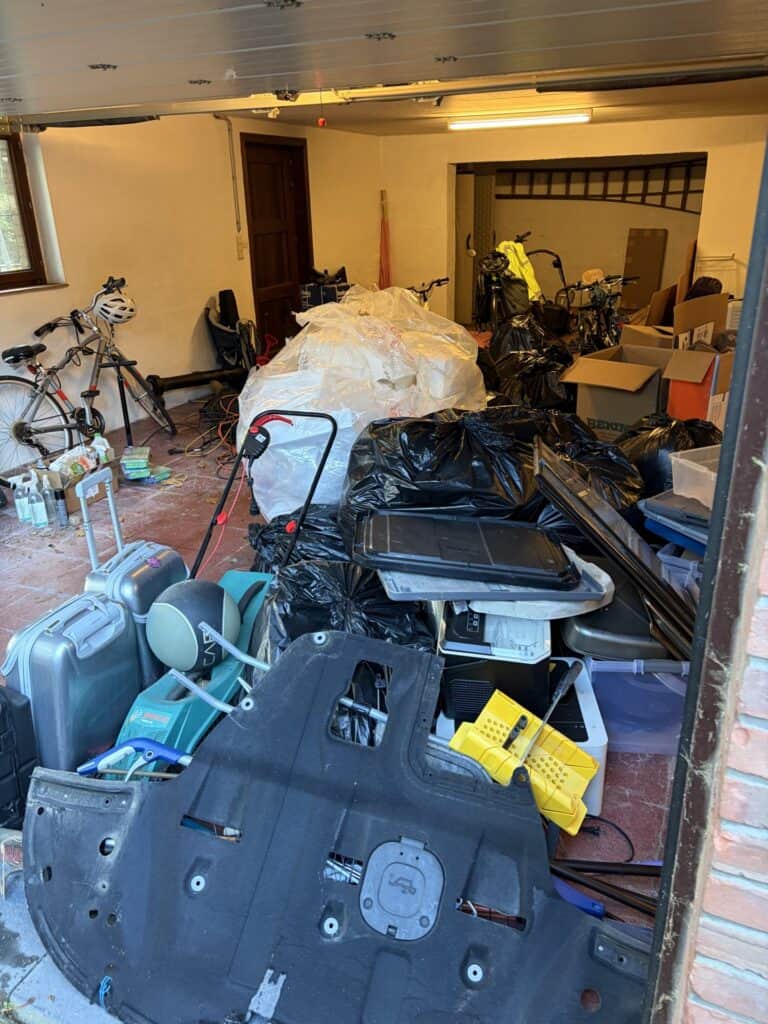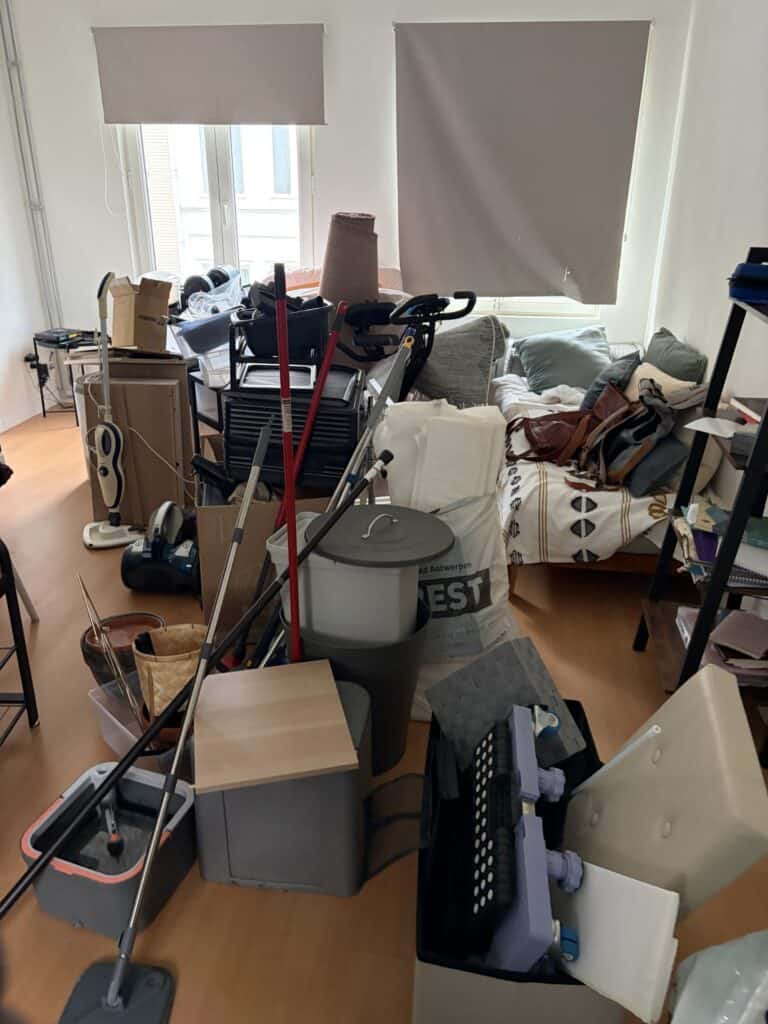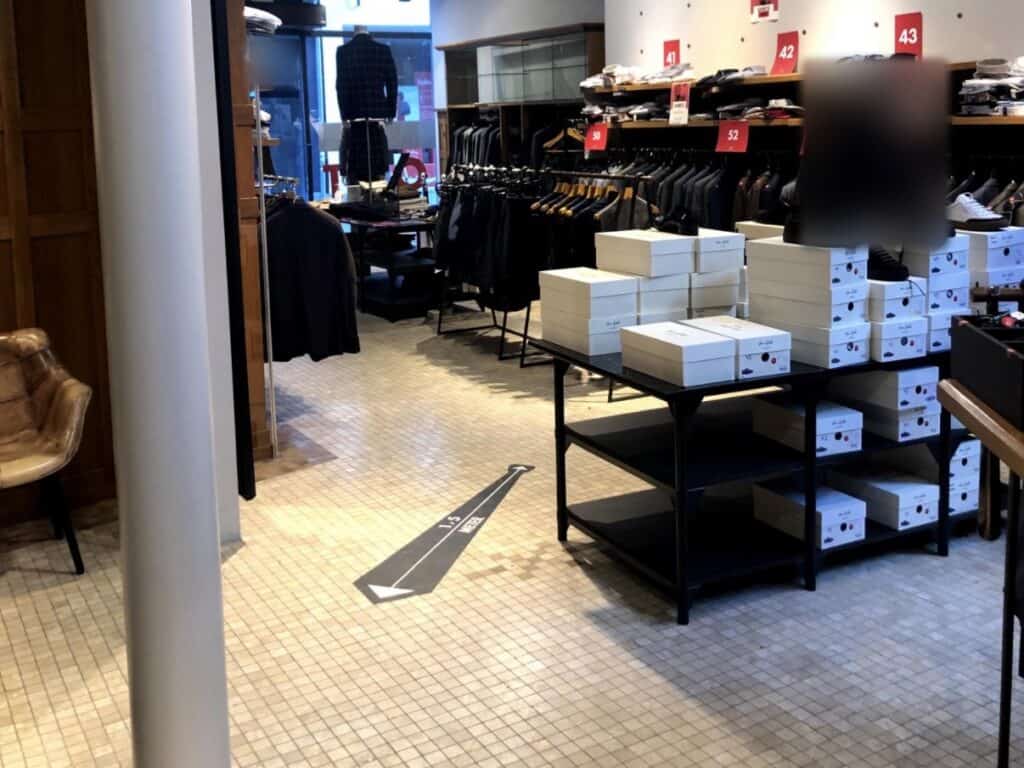
At the end of a commercial lease, your store is returned to the landlord. That’s when the same question usually comes up: What needs to be removed? The shelves, of course. But what about the fitting rooms you had built? The flooring you installed? And the counter that fits just right?
The answer is almost always in your lease agreement. In this article, you’ll learn what to look out for, what usually needs to be removed, and how to avoid disputes during the move-in inspection.
Short answer: First, read your lease agreement: it will specify whether you must return the property to its original condition. Then, ask the landlord in writing what items may remain. Loose furnishings, inventory, and trash must always be removed. Built-in fixtures, such as fitting rooms and flooring, may remain only if your lease specifies this, if you installed them without permission, or if you agree to this with the landlord. Keep the initial inventory list on hand and retain proof of disposal.
1. When can you quit?
A commercial lease has a term of at least 9 years. As a tenant, you may terminate the lease at the end of any 3-year period without giving a reason. You must give at least 6 months’ notice, either by registered letter or through a bailiff. This right is enshrined in law; it does not need to be specified in your lease agreement.
Would you like to terminate the lease at a different time? If so, you will need the landlord’s consent. You must document that consent in a notarial deed or in a declaration before a justice of the peace.
Knowing that date will also let you know how much time you have to clear everything out.
2. What does your lease say?
Look for these points in your contract:
- "In its original condition": In principle, you must remove whatever you had built or installed yourself.
- Renovations: Sometimes it states that any work you’ve done becomes the property of the landlord. Sometimes it states that you must remove it.
- The property inventory at the start: which shows what the property looked like when you moved in. It serves as the basis for the comparison at the end. It is required by law. If one was not prepared, the law presumes that you received the property in the condition it was in at the end of the lease, unless the landlord proves otherwise.
- The Guarantee: when and how it is released.
Does the contract say anything about your work? If not, the Commercial Lease Act applies:
- Working with the Landlord's Permission (even if not explicitly stated): The landlord cannot require you to remove them. However, he can refuse to let you take them with you. If they remain, he must pay you the value of the materials and labor, or the increase in the property’s value. He gets to choose which of the two.
- Working Without Permission: The landlord may require you to restore the property to its original condition, possibly in exchange for compensation. If the landlord performs the repairs himself, he does not have to pay you anything.
Any provision in your lease agreement, such as "in its original condition," takes precedence over that rule. If it’s unclear whether permission was granted, or if you and the landlord disagree, seek advice—for example, from your professional association or a lawyer.
3. Ask in writing what can stay
It’s often better for everyone if certain things stay the same. A new tenant might want to keep the counter, the fitting rooms, or the flooring. That saves you work and money, and the landlord can rent out the property more quickly.
Always put it in writing—for example, in an email with photos attached—to clarify what’s left behind and who’s responsible for it afterward. A verbal agreement with the previous landlord or a real estate agent won’t help you if there’s a dispute over the move-out inspection.
4. What usually needs to be removed?
Always gone:
- freestanding fixtures: clothing racks, shelves, wall systems, display units, the sales counter, and the cash register unit, if they are freestanding;
- mirrors, mannequins, decorations, and window display materials;
- the remaining inventory and everything from the warehouse or the basement;
- cardboard, plastic, hangers, and other trash.
You must move out if the contract says so or if the landlord is entitled to require it:
- built-in fitting rooms and partition walls;
- fixed shelves and built-in furniture;
- Flooring that you installed yourself, such as carpet, vinyl, or laminate.
We also handle the demolition, along with clearing out the space and removing the debris. It’s listed as a separate item on the same quote because it varies greatly from store to store. Filling holes in the wall or painting isn’t included: that’s repair work for a contractor or painter.
Please note: Anything that comes from your store is considered commercial waste. In Antwerp, you are not allowed to take this type of waste to the city’s recycling centers. You can read more about this in our article on Commercial Waste as a Self-Employed Person in Antwerp.
5. The Inventory of Items and the Security Deposit
At the end of your stay, you and the landlord usually draw up an inventory upon your departure. This is compared to the initial inventory: you return the property in the same condition as when you received it, except for normal wear and tear due to age. A few tips:
- Take your own vintage-style photos of every room, right after the store has emptied out. Don't forget the basement, the storage room, and the restrooms.
- Keep the proof of disposal. This shows that everything has been disposed of properly and hasn't been left behind anywhere.
- Leave the property swept clean, or have a final cleaning done. We can arrange that through our regular cleaning partner.
Your contract specifies how and when the security deposit will be released. For commercial leases, the law does not address this: there is no legal maximum amount and no requirement for a blocked account, as is the case when renting a residential property. Usually, the security deposit is released after the final inspection, provided there is no damage or rent in arrears.
6. How much does it cost, and how quickly can it be done?
Clearing out a store in the city of Antwerp starts at €400 for a small store of up to approximately 50 m², and typically ranges from €700 to €1,500 for a store between 50 and 150 m². Prices exclude VAT but include carrying, transportation, and disposal fees. Removing built-in fixtures is subject to a separate quote. All details can be found on our prices page.
We can usually come by within 2 to 5 business days. If you need it done faster, we’ll try to get there within 48 hours (+30%). A typical store is usually cleared out in one day.
Frequently Asked Questions
Do I have to tear down the fitting rooms that I had built myself?
That depends on your lease agreement and what you’ve agreed upon with the landlord. If it specifies "original condition," then usually yes. If nothing is specified and you had the landlord’s permission, then by law he cannot require you to remove them. Ask for written confirmation before having anything removed: sometimes the next tenant might want to keep them.
Can you guys remove the floor covering, too?
Yes. We'll remove and dispose of any carpet, vinyl, or laminate flooring that you installed yourself. This will be listed as a separate line item on the same quote.
Will I receive a receipt for the landlord?
Yes. You will always receive an official proof of disposal.
Do I have to be there in person?
No. One key is enough. You will always receive proof of removal, and photos of the empty property upon request.
No inventory was ever taken at the start. What now?
In that case, the law presumes that you received the property in the condition it was in at the end of the lease, unless the landlord proves otherwise. When you move out, be sure to take dated photos of each room and keep proof of disposal.
Does your store have to be returned to the landlord empty?
- Fixed price upfront, based on photos
- Furnishings, inventory, and trash all taken away at once
- Remove fitting rooms, counter, and flooring; based on quote
- Official proof of removal for your landlord
- Final cleaning provided by our regular cleaning partner
More info: store clearance and, for clothing stores, clearing out a clothing store. Would you rather call? Give us a call at +32 469 63 55 62.