Black spots in the corner of the bathroom, a musty odor in the bedroom, or mold behind the closet: mold on walls is a common problem in many homes. It’s more than just a cosmetic issue, because mold always indicates a moisture problem and can cause health issues.
You can usually remove small patches of mold yourself. In this article, you'll learn how to do so safely, how to prevent new mold from forming, and when it's best to call in a specialist.
1. Why does mold grow on your walls?
Mold needs moisture. It grows mainly in places that are often damp and poorly ventilated, such as bathrooms, basements, bedrooms, and against cold exterior walls. The most common causes:
- Condensation: Water vapor from showering, cooking, and breathing condenses on cold walls and windows.
- Insufficient ventilation: The moist air can't escape.
- Leaks and seepage: due to a leaking pipe, gutter, or roof.
- Rising damp: moisture that seeps into the walls from the ground.
You can recognize mold by black, green, or gray spots, often accompanied by a musty odor. Sometimes the paint or wallpaper peels off.
2. Is mold harmful to your health?
Molds and their spores can cause symptoms such as sneezing, a stuffy nose, itchy eyes, coughing, or shortness of breath. People with asthma, allergies, or a weakened immune system are particularly susceptible, as are children and the elderly. You can find more information at the Poison Control Center. Are you experiencing any symptoms? Talk to your family doctor about them.
3. Removing Small Mold Spots Yourself
Is it a small, superficial spot? If so, you can usually treat it yourself. To do so, follow the advice from the Department of Health Care from the Flemish government:
- Protect yourself: Wear gloves and a dust mask (FFP2), and open a window.
- Use all-purpose cleaner and water: Wipe away the mold with a sponge or a damp cloth.
- Stubborn stain? First, wet the surface, and then use a stiff, damp brush. This will reduce the amount of dust particles released into the air.
- No bleach: The Flemish government advises against that.
- Let everything dry thoroughly and air out the room.
Don't Do It Yourself if you have respiratory problems or are allergic to mold. Pregnant women and children should also avoid removing mold.
4. How to Prevent New Mold
- Air out the room daily, especially after showering and cooking, and leave the vents open.
- Use the range hood and the bathroom fan.
- Dry off wet surfaces, such as shower walls and windowsills.
- Don't place cabinets and beds right up against a cold exterior wall; leave a few centimeters of space.
- It's best to dry your laundry outdoors or in a well-ventilated area.
- Have leaks and moisture problems repaired quickly.
5. When should you consult a specialist?
Cleaning won't solve the problem if the cause remains. Ask for help if:
- the mold covers a large area or is embedded deep within the wall;
- the mold keeps coming back after cleaning;
- there is a clear moisture problem, such as rising damp, a leak, or seepage;
- someone in the household is experiencing health problems.
To address the cause, contact a moisture control company or a contractor. If you’re experiencing health issues, your family doctor can refer you to a medical environmental specialist, who can assess the indoor environment of your home.
6. Does the space need to be cleared out first? We can help with that.
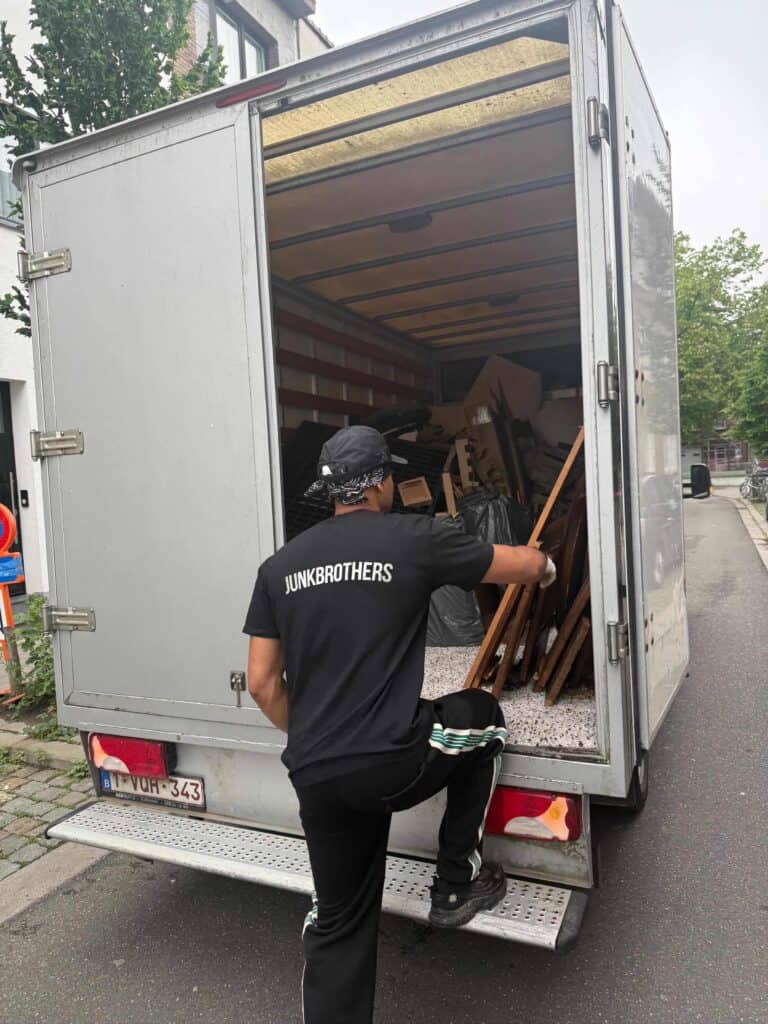
JunkBrothers does not treat mold or resolve moisture problems. However, we do help if a room, basement, or attic needs to be cleared out first—for example, before a specialist can get to work:
- We're removing furniture, boxes, and other items from the room so that we can work freely.
- We properly dispose of damaged mattresses, cardboard boxes, and furniture you no longer want.
- We'll set aside whatever you want to keep.
See also how to create a cleans up a cluttered basement, or check out our services for Cleaning Up in Antwerp and furniture collection.
Checklist: Mold on Your Wall
- ☐ Possible causes: condensation, a leak, rising damp, or insufficient ventilation
- ☐ Small stain removed with all-purpose cleaner and water, while wearing gloves and a face mask
- ☐ No bleach used
- ☐ Air out the room daily and move furniture away from the exterior wall
- ☐ Specialist called in for severe or recurring mold
- ☐ Contacted a primary care physician regarding health concerns
Clearing out a room for mold treatment?
Send us a few photos via WhatsApp. You'll usually receive a fixed price for clearing out the space within 2 hours.
Request a free quotePrefer to call? Give us a call at +32 469 63 55 62.